How to Style an Elegant Wedding in a Historic Theatre Near Kansas City
Three real celebrations show why the most polished rooms begin with restraint
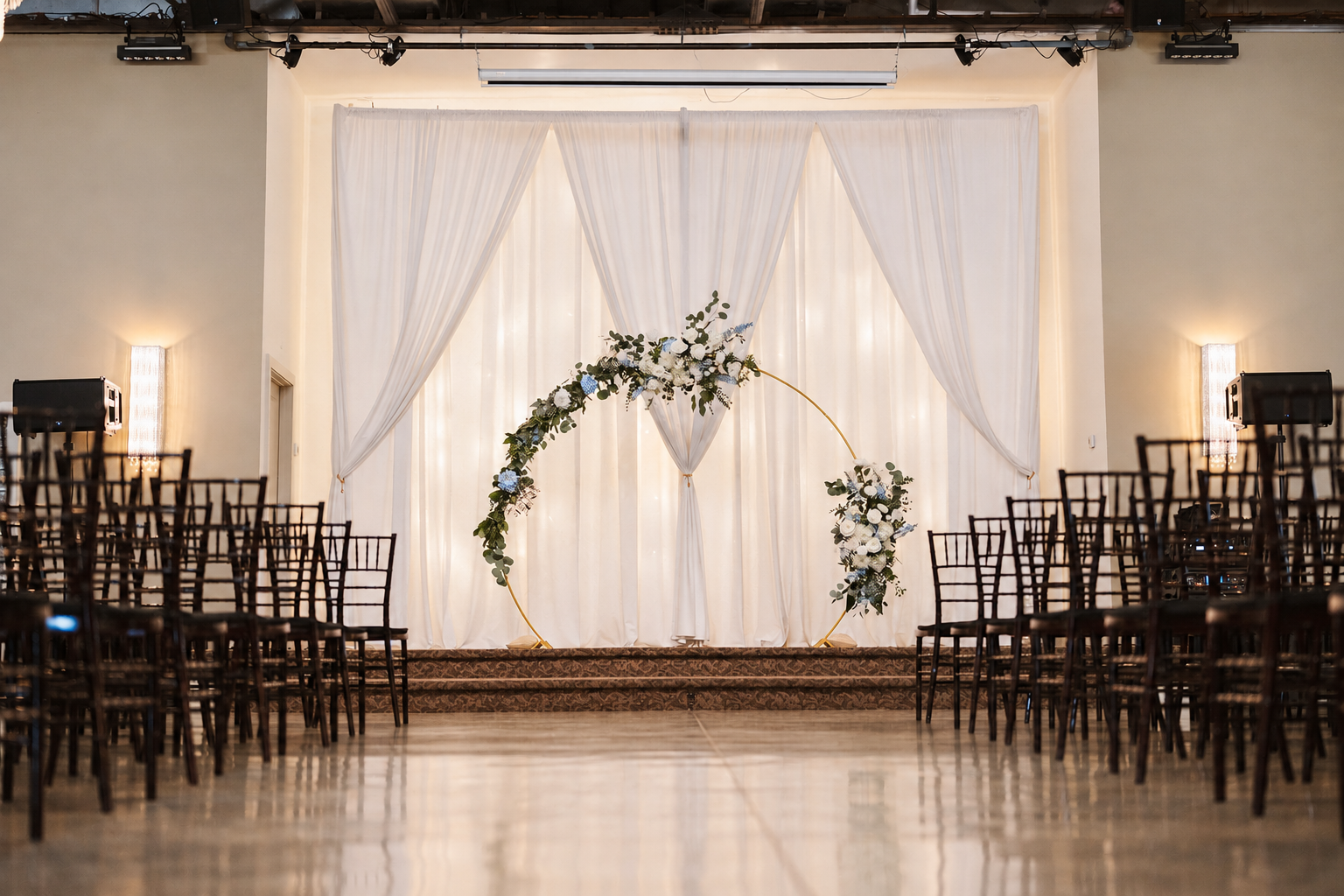
A restrained ceremony frame lets the Grand Auditorium carry the atmosphere | Photo by Aventi Weddings
An elegant wedding at Mission Theatre does not come from filling every corner. Across three recent celebrations, the most polished rooms shared the same five decisions: they let the theatre's architecture lead, created one clear focal point, kept color disciplined, repeated a small floral vocabulary, and planned for warm light. The result felt formal without feeling stiff - and personal without losing the character of the room.
Mission Theatre began as a 1938 Art Deco cinema in Mission, Kansas. Today, the Grand Auditorium pairs a white-draped stage with a dark ceiling, crystal chandeliers, clean walls, and a sweeping staircase. That contrast already gives a wedding its foundation: black, ivory, glass, and warm metallic light. The strongest designs in these galleries did not cover that foundation. They edited around it.
If this is your first look at the venue, begin with A Wedding That Feels Like a Movie for the story behind the restored theatre. Then return to these five choices with your own celebration in mind.
Choice One
Let the Room Establish the First Layer
Before choosing linens or florals, look at what is already in the room. The white stage draping creates softness. Black chairs and the exposed dark ceiling add definition. Crystal chandeliers pull the eye upward, while the stage gives every ceremony and reception a natural front. Together, those elements read as elegant before a centerpiece arrives.
A useful starting question is not “What should we add?” but “What should remain visible?” In these weddings, the chandeliers stayed open, the stage kept a generous amount of white space, and the floor plan allowed guests to see across the room. The architecture is not background decoration. It is the first design layer.
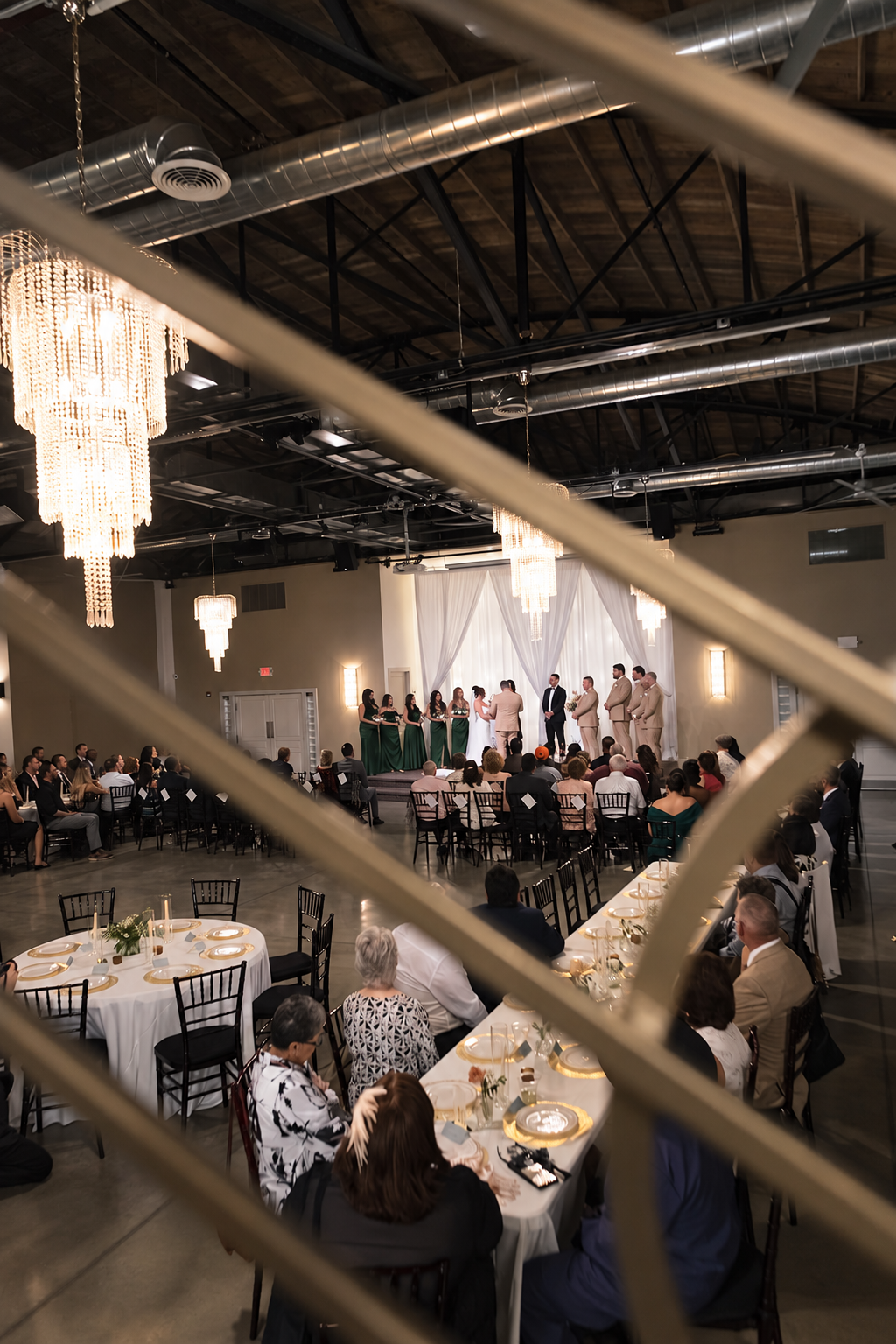
The chandeliers stage and dark ceiling already establish the room's formal foundation | Photo by Foster Photo Co
Choice Two
Create One Strong Focal Point
Each celebration gave the eye one place to land. One ceremony used three compact floral groupings on white pedestals. Another used a delicate circular arch. During the reception, a simple white sweetheart table returned the focus to the same stage. None of these choices tried to decorate the full width of the room.
That restraint matters in a theatre. A stage already frames the couple, so the floral design only needs to clarify the frame. Choose one shape - a low grounded arrangement, a pair of asymmetrical clusters, or a single arch - and let the draping provide the negative space around it.
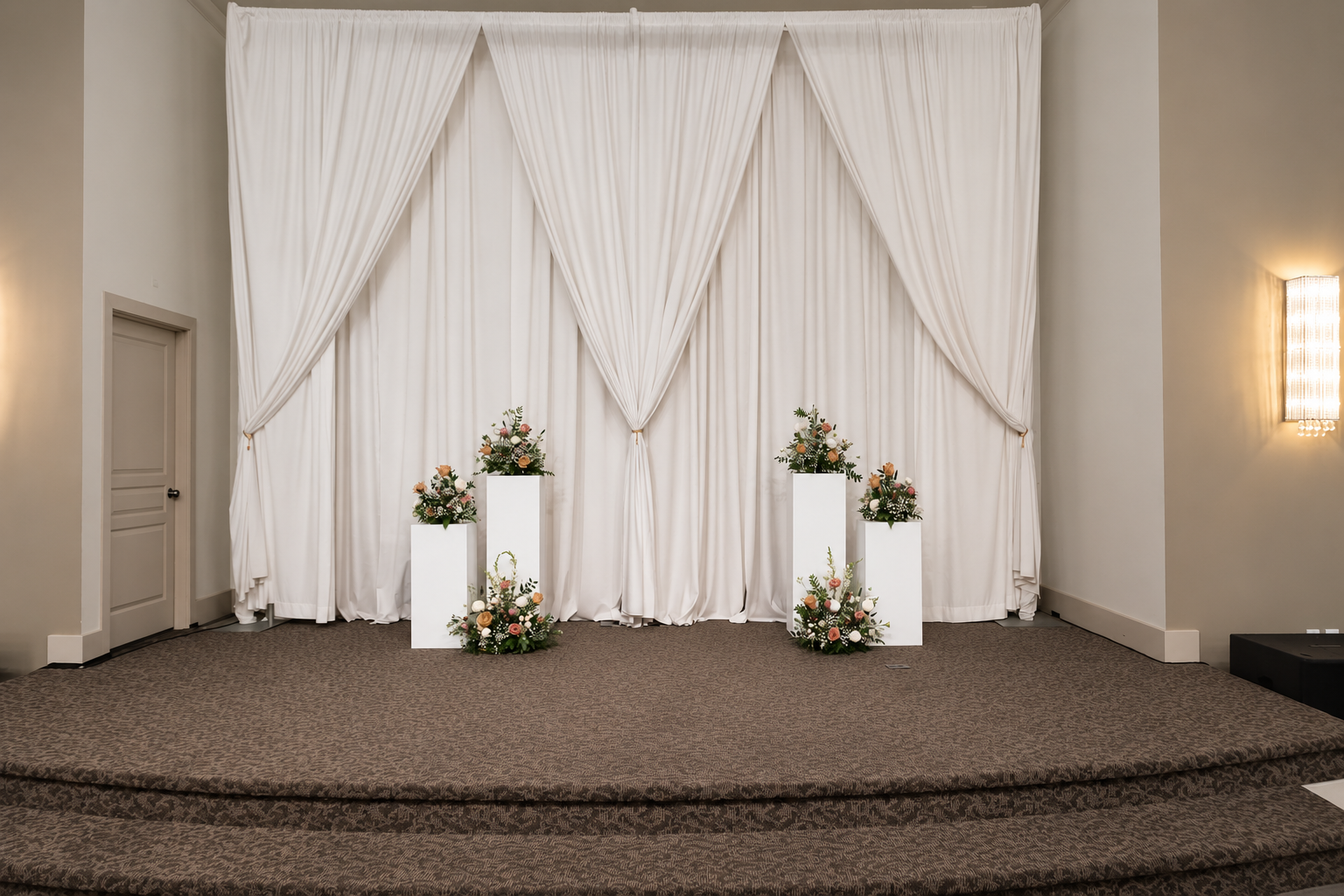
Three floral groupings create one clear ceremony focal point | Photo by Foster Photo Co
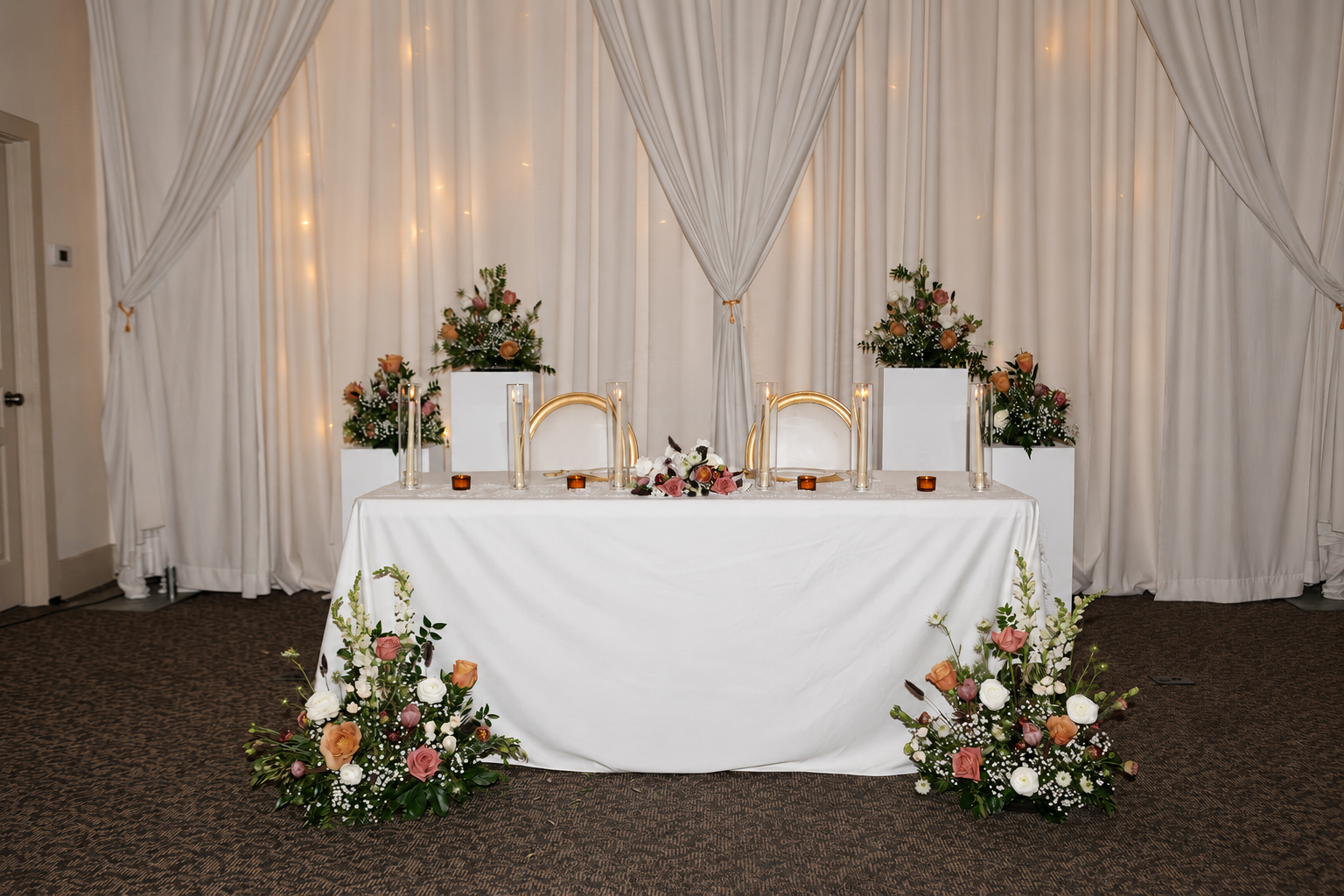
The stage becomes a composed reception anchor without filling every corner | Photo by Foster Photo Co
Choice Three
Use a Neutral Base and One Accent Family
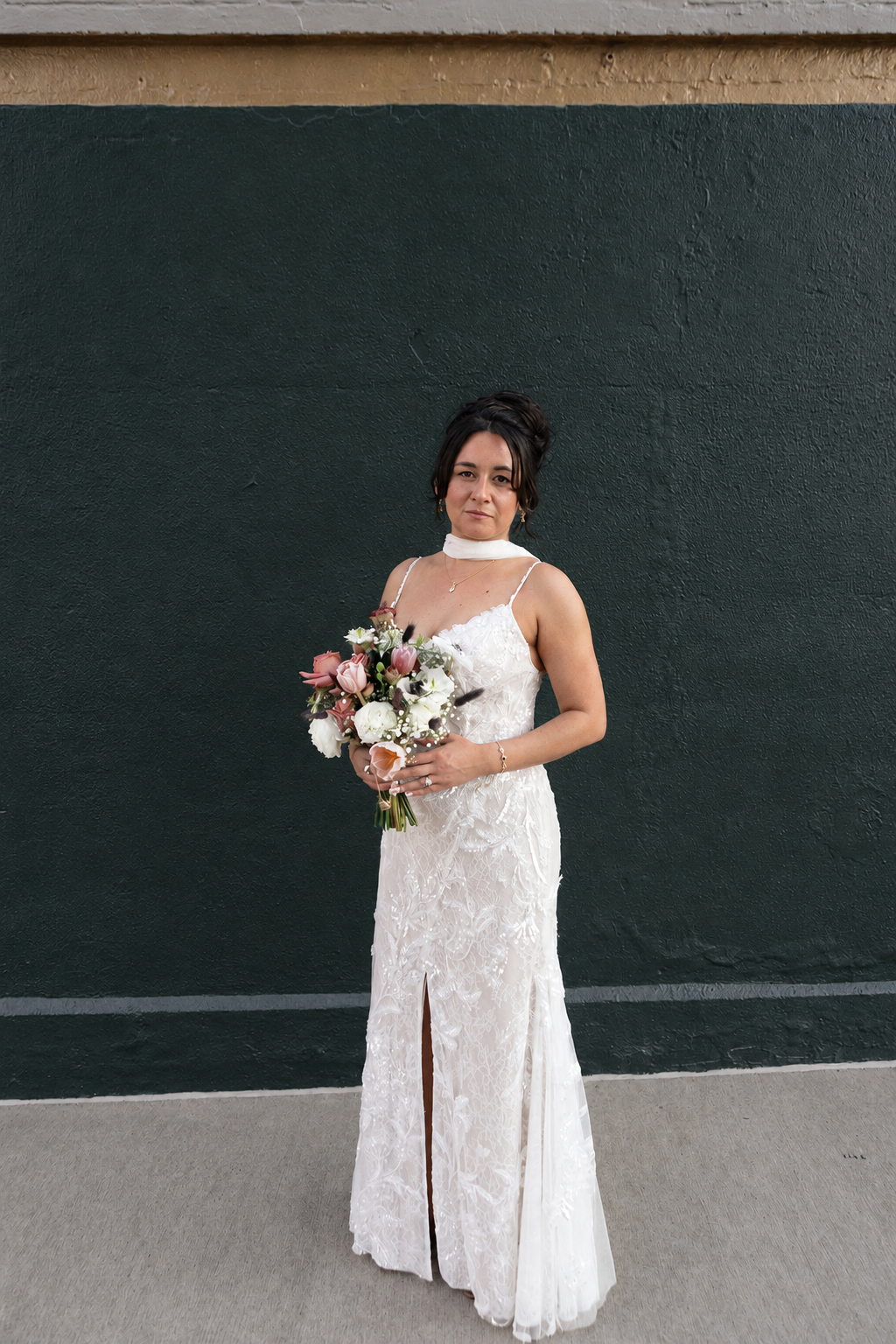
All three weddings began with a neutral base, but they did not look identical. Forest green dresses and tan suits made one celebration feel grounded and warm. Another used black linen, gold chargers, white flowers, and a small amount of pale blue. The accents were different; the discipline was the same.
For Mission Theatre, black, ivory, and warm gold can act as the common thread. Add one color family through the wedding party, flowers, paper, or napkins, then repeat it selectively. Keeping the largest surfaces quiet lets the people and florals hold the color - and keeps the chandeliers from competing with the tables below.
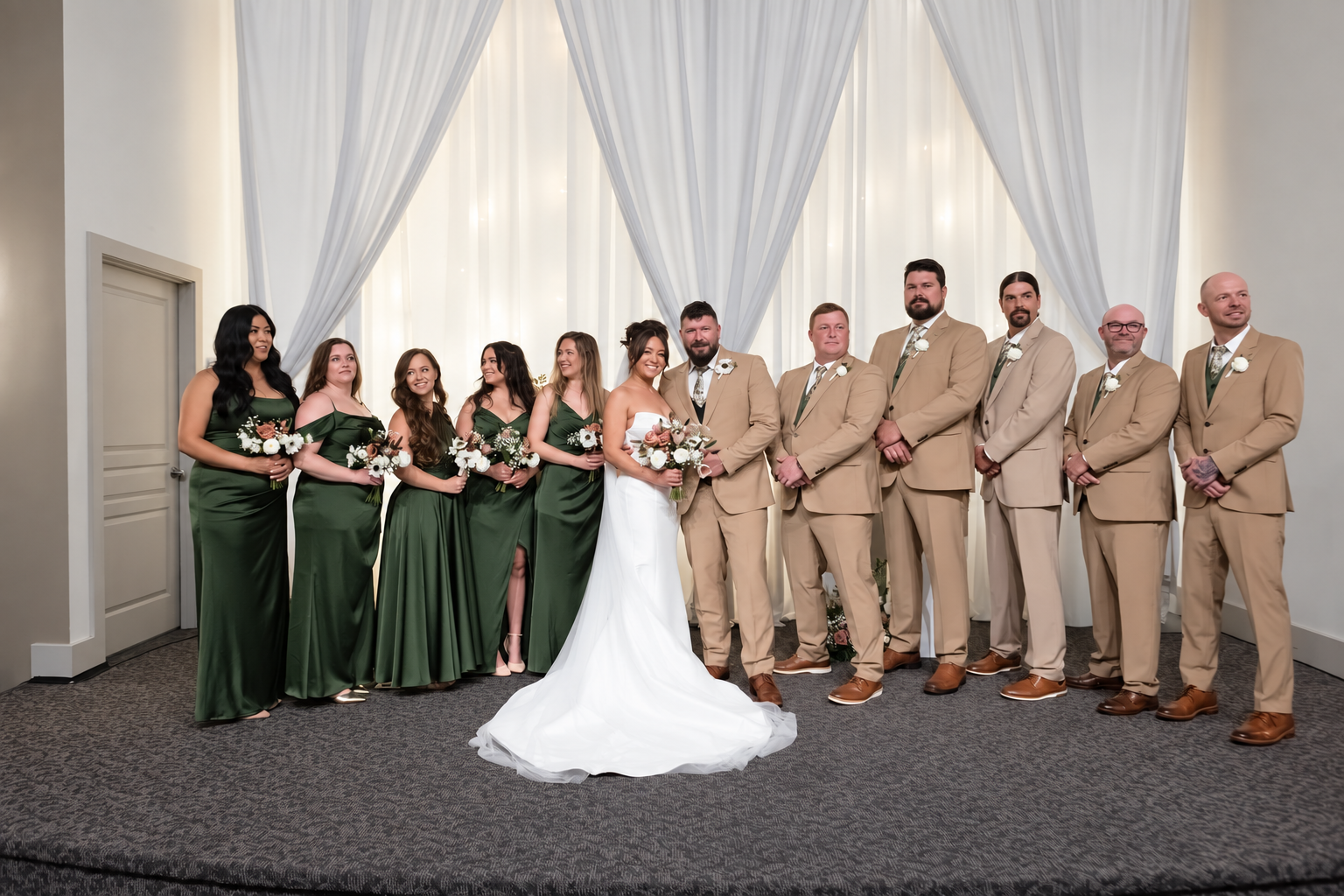
Forest green and tan add personality while the stage stays light and quiet | Photo by Foster Photo Co
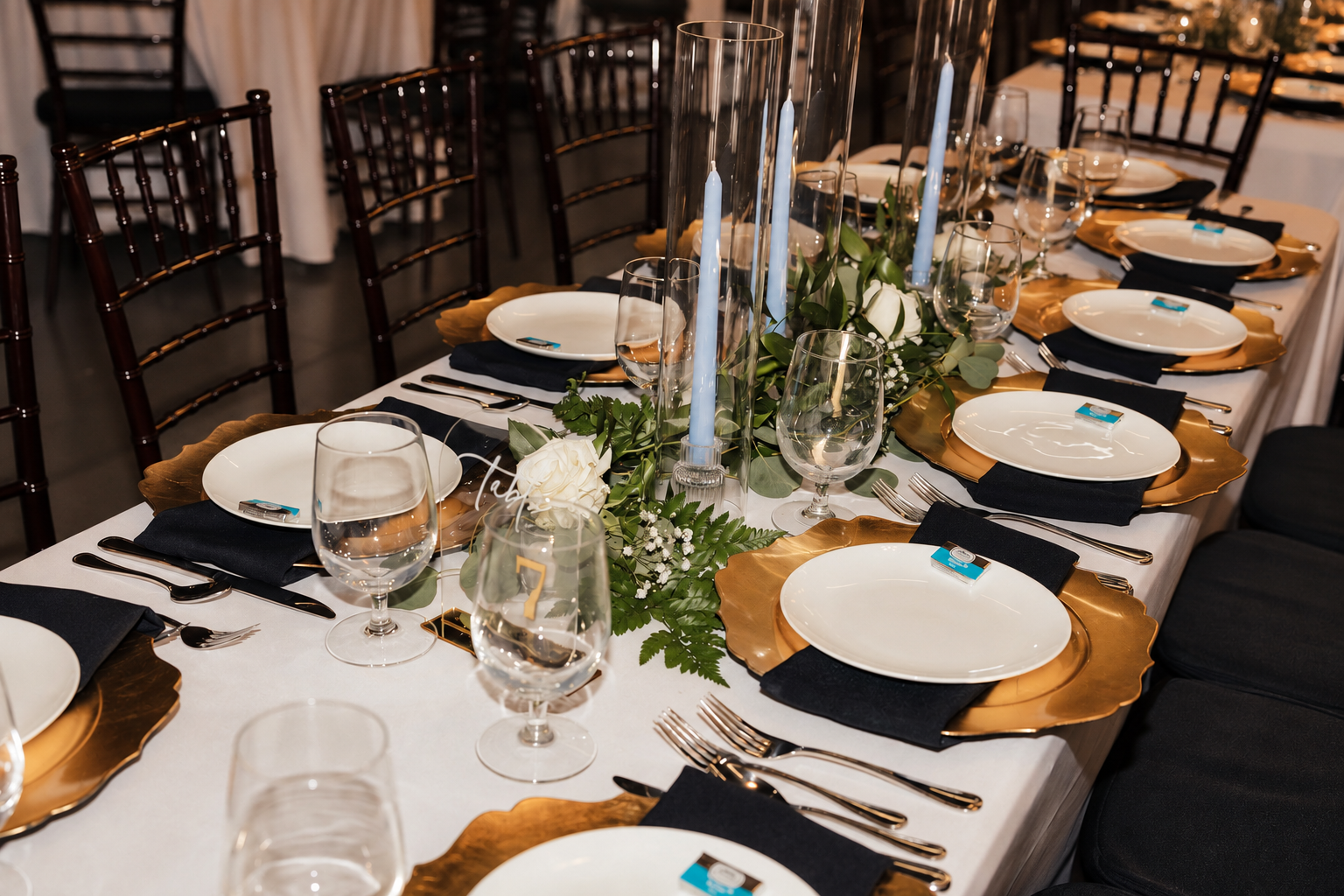
Black linen gold chargers and white florals echo the room instead of competing with it | Photo by Makenzie Mathison Photography
Backdrop Four · After Dark
Repeat a Small Floral Vocabulary
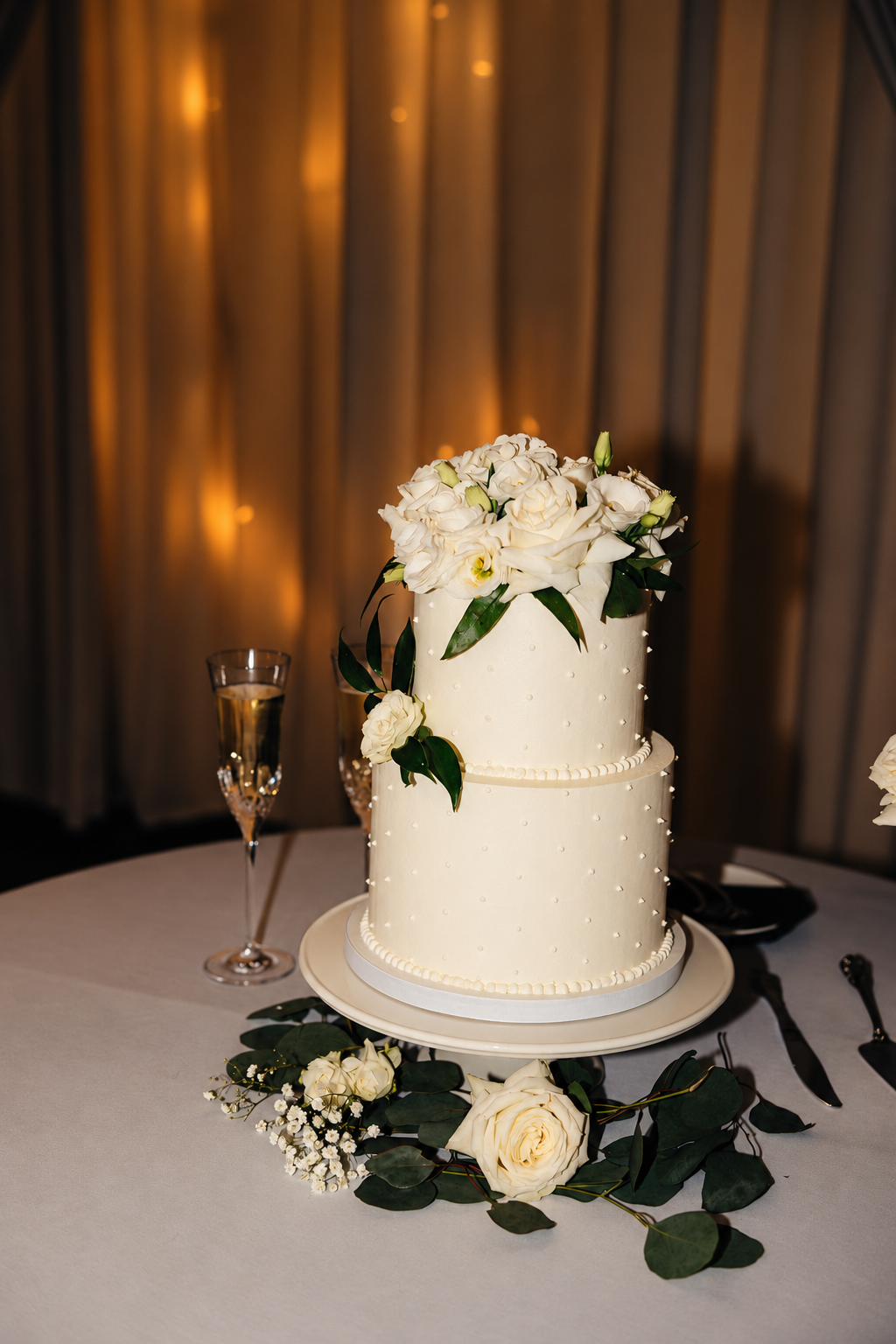
Elegant rooms often feel cohesive because a few ingredients return in different proportions. In these galleries, white flowers and greenery moved from bouquets to the ceremony frame, then to the head table. Pale blue appeared as a quiet accent rather than a second theme. The arrangements changed scale, but their visual language stayed familiar.
Ask your florist to define a short recipe: one dominant flower color, one supporting tone, one greenery shape, and one vessel finish. The ceremony may use the recipe vertically while the head table stretches it into a low horizontal line. Repetition gives the day continuity without making every arrangement identical.
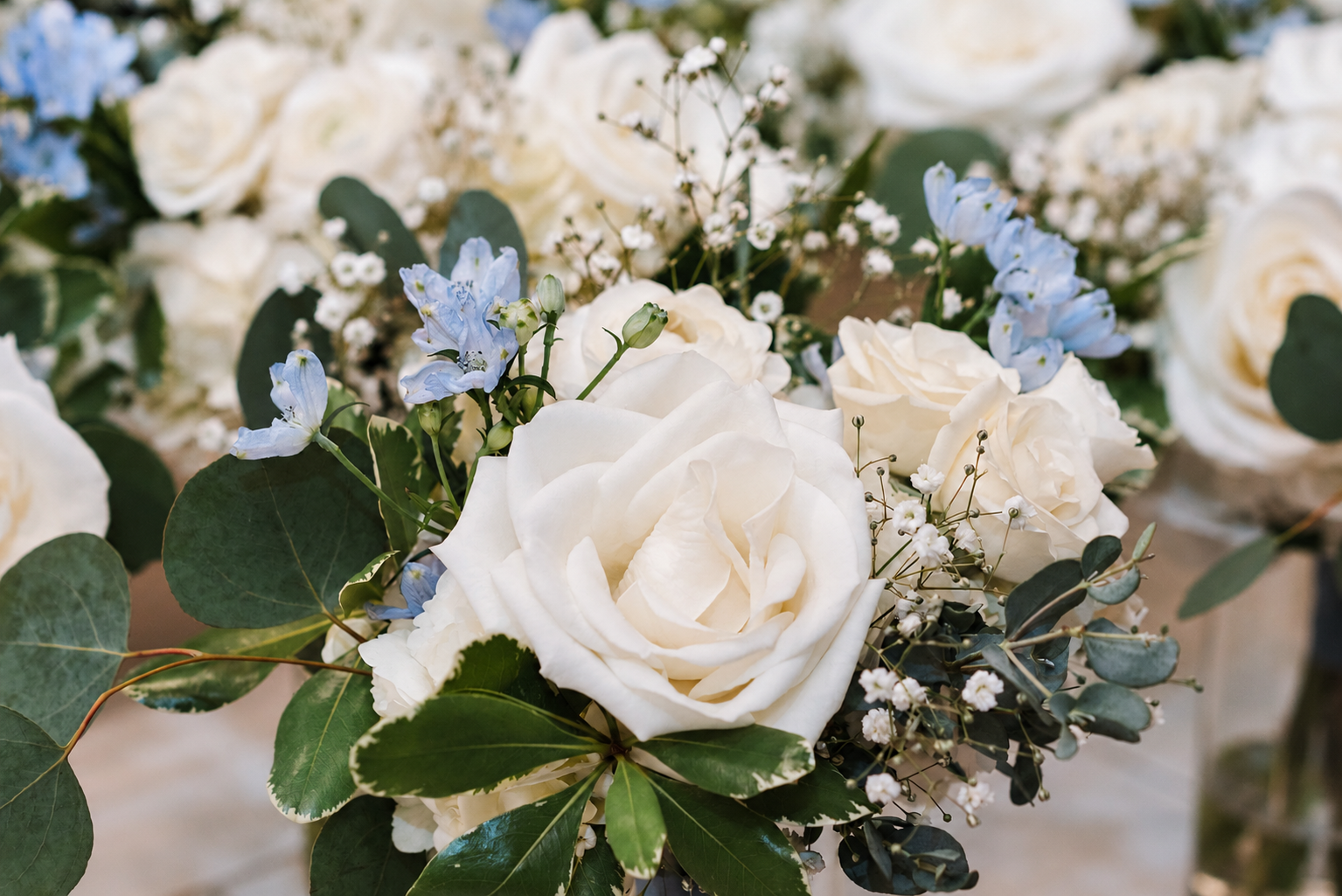
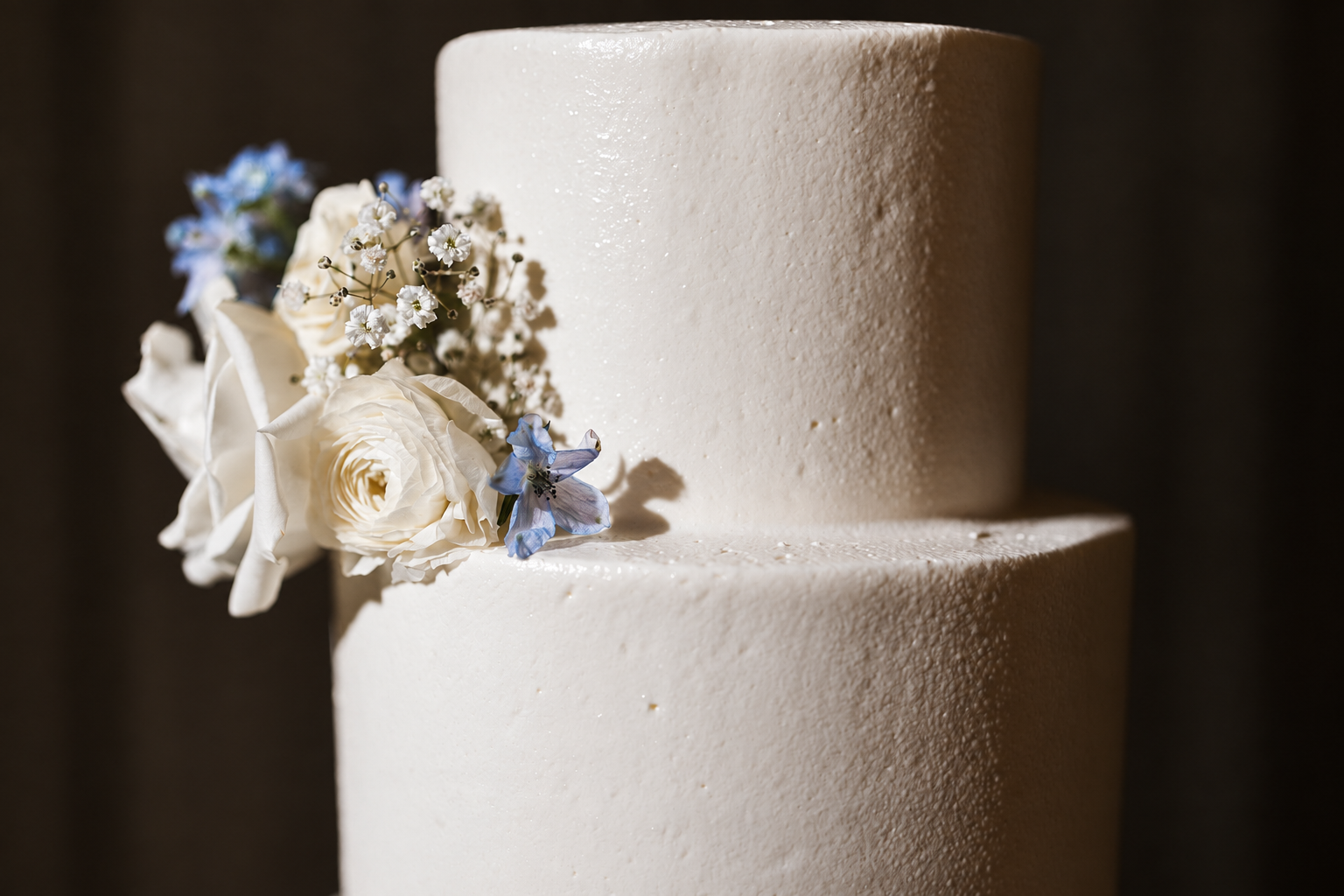
A limited floral recipe makes repetition feel intentional | Photo by Aventi Weddings
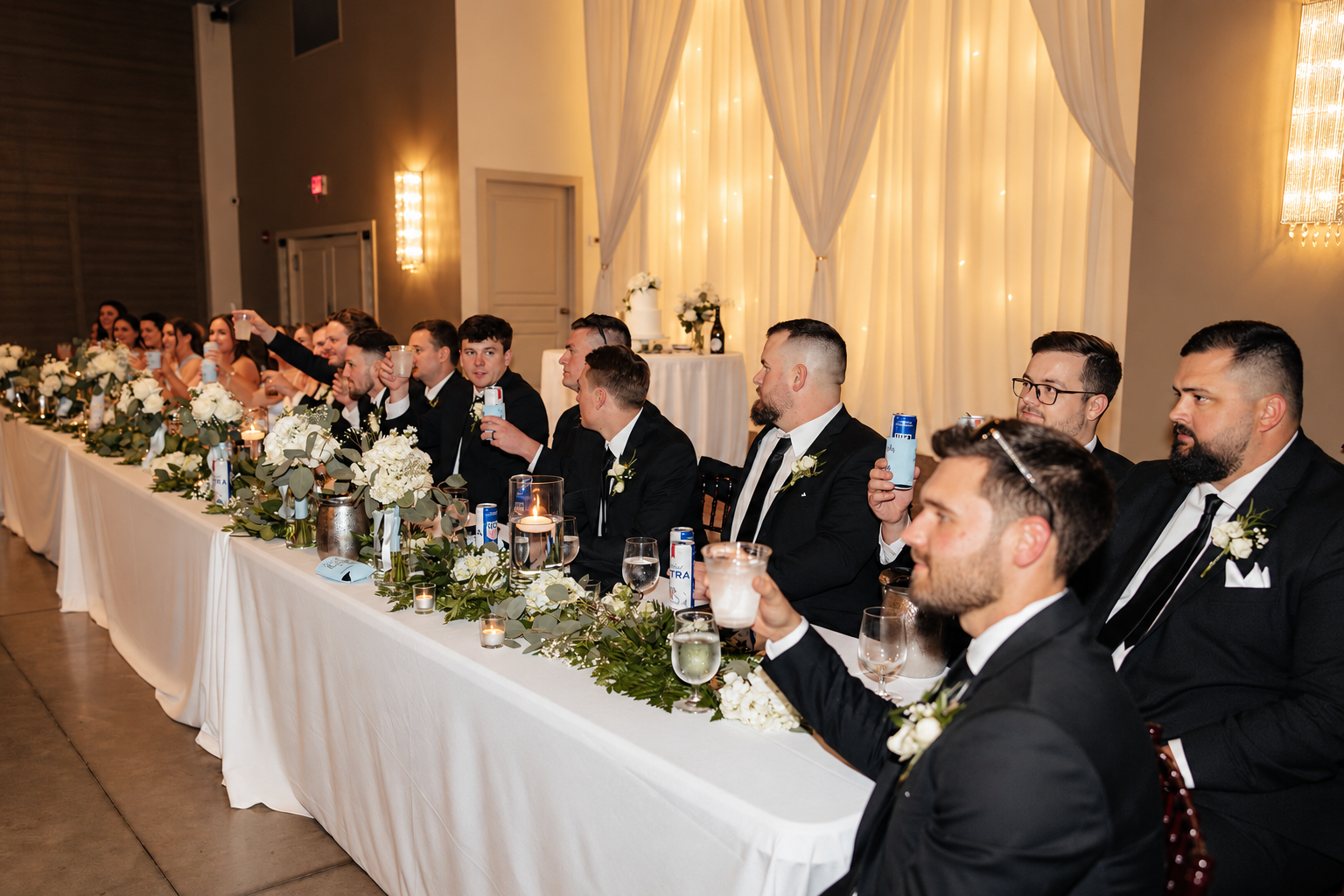
The same white flowers and greenery travel to the head table in a longer quieter line | Photo by Makenzie Mathison Photography
Choice Five
Plan the Design for Warm Light and Movement
A room can look very different after dinner begins. Candlelight becomes more visible, chandeliers feel warmer, and the center of attention moves from the stage to entrances, toasts, and the dance floor. The most elegant celebrations plan for that transition instead of treating reception lighting as an afterthought.
Keep key faces and floral moments inside the light. Let candles add warmth at table height, and leave a few clear sightlines toward the chandeliers and staircase. That way, the room still feels composed when everyone is moving through it - whether the moment is a first dance or a wedding-party entrance.
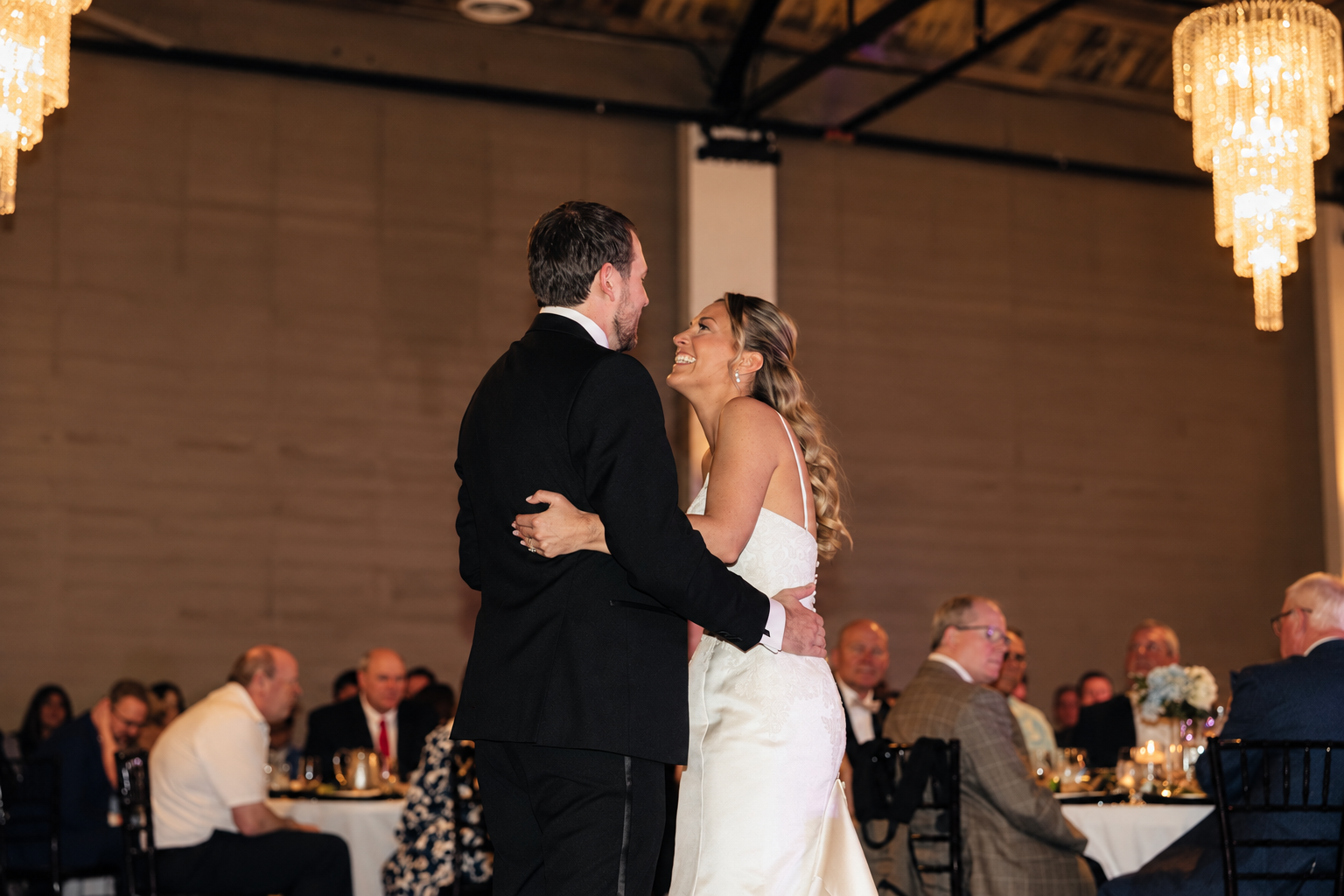
Warm light gives the formal room a softer feeling once the evening begins | Photo by Makenzie Mathison Photography
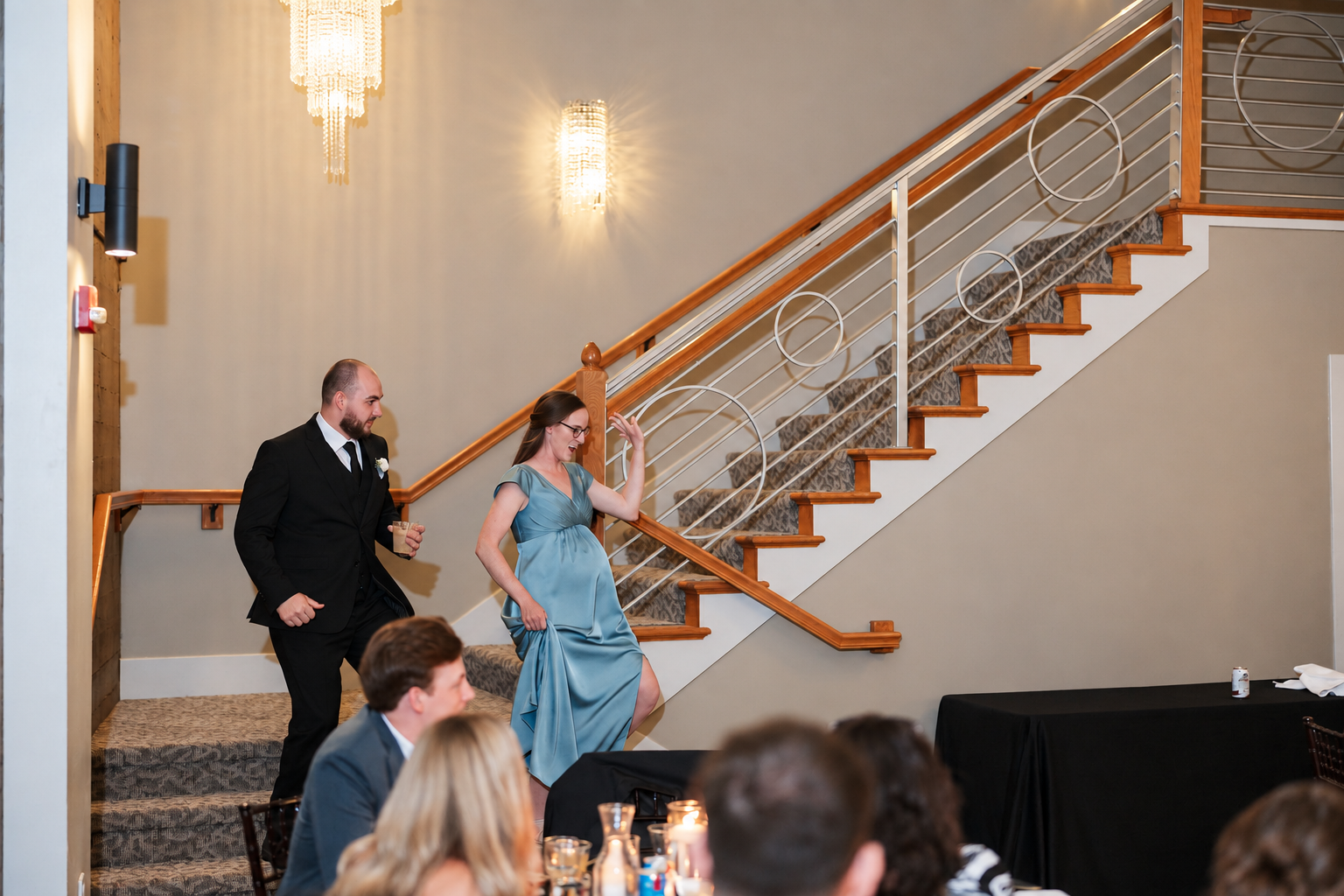
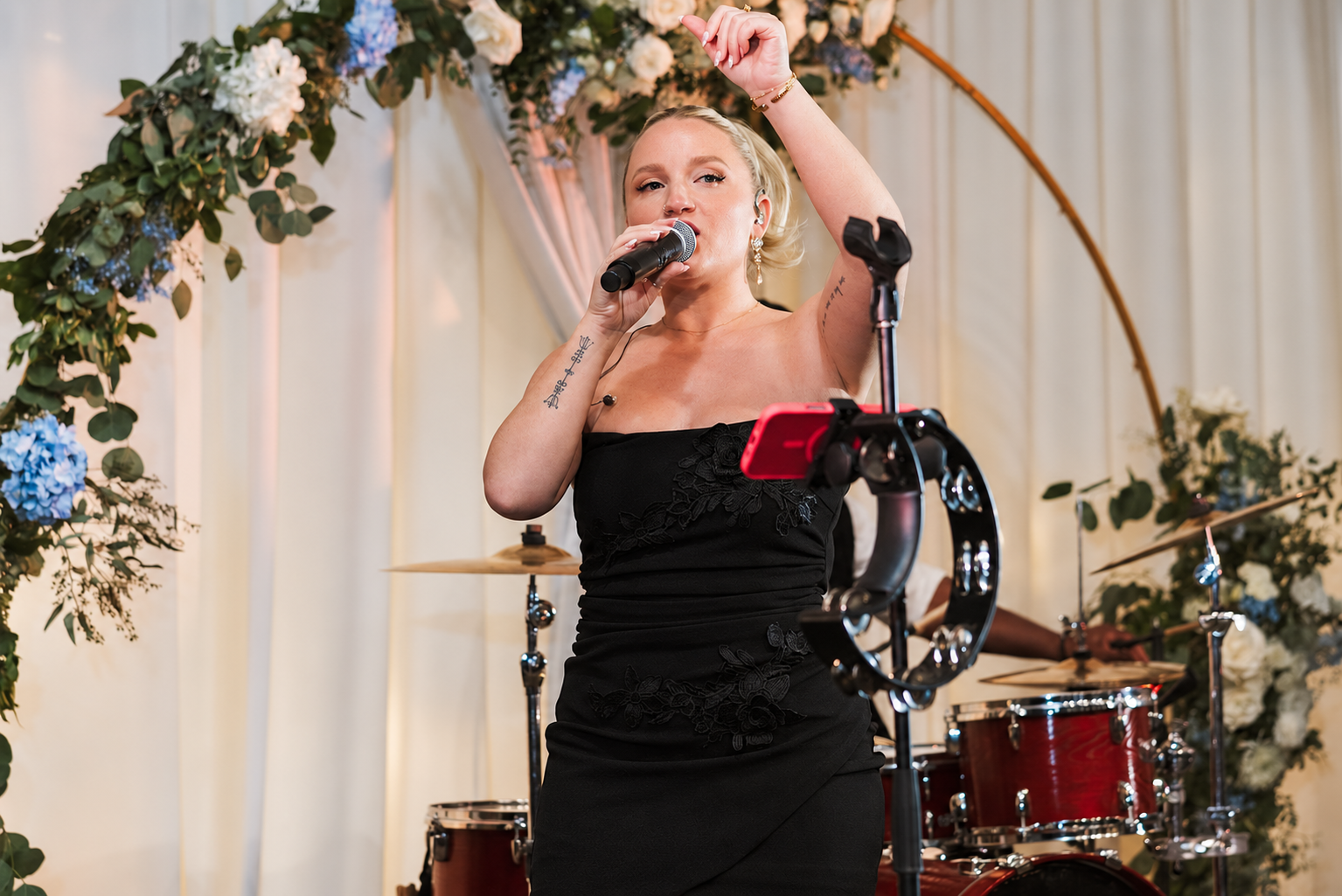
Elegance continues through the room's movement not only its still-life details | Photo by Aventi Weddings
What the Three Weddings Have in Common
The flowers, colors, and clothing changed from one celebration to the next. The underlying approach did not. Each wedding protected the architecture, chose one focal point, limited the palette, repeated its materials, and allowed the light to finish the room. That is why each one feels elegant in photographs while still feeling like a different couple.
If you are planning a Mission Theatre wedding, bring three things to your venue tour: one image of the ceremony frame you love, one color or fabric swatch, and one reception photograph that captures the feeling you want after dark. Stand in the Grand Auditorium and decide what the room already gives you. Your design can begin there.
For a closer look at how the full day moves through the venue, read A Mission Theatre Wedding Room by Room. For outdoor portraits, save The Marquee and the Alley for your photography timeline.
Planning Answers
Frequently Asked Questions
-
Its white-draped stage, crystal chandeliers, dark ceiling, curved staircase, and Art Deco history create a formal foundation before decor is added.
-
Black, ivory, white, warm gold, greenery, forest green, tan, and pale blue all appear naturally in these three weddings. The clearest approach is a neutral base with one controlled accent family.
-
Usually one strong focal shape is enough. Floral pedestals, a low grounded arrangement, or a single arch can frame the couple while leaving the white draping visible.
-
Yes. Mission Theatre hosts ceremonies and receptions on site. Ask the venue team which layout and transition plan best fit your guest count and timeline.
-
The current venue information lists up to 250 guests for a seated event and up to 400 for a cocktail-style event. Confirm the exact capacity for your chosen floor plan.
-
Mission Theatre is at 5909 Johnson Drive in Mission, Kansas, about ten minutes west of the Country Club Plaza. The venue's current information also notes more than 300 off-street parking spaces.
See the room in person.
Sometimes the clearest way to imagine your wedding is simply to stand in the room and see how it feels. We’d be honored to walk the space with you and help you picture a celebration that feels entirely your own.