Olive, rust, merlot and warm gold create a fall palette that feels composed, dimensional and entirely at home beneath the chandeliers.
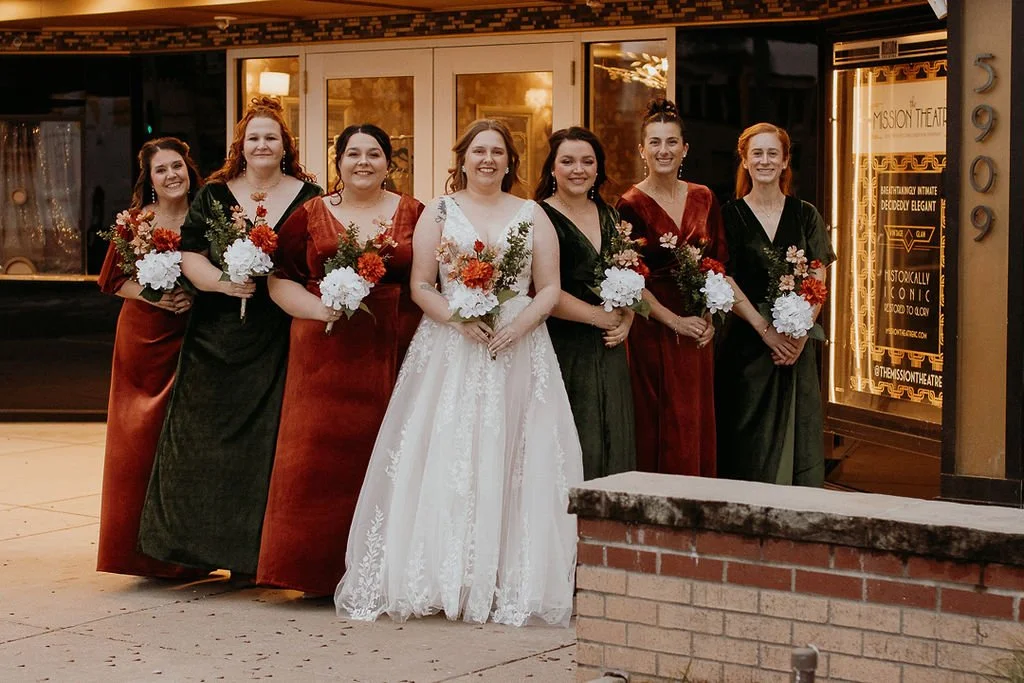
Olive and rust read as formal, not rustic, against Mission Theatre's Art Deco entrance. Photography by Raven & Rose Photo
Fall does not need to arrive at a wedding as a theme. At Mission Theatre, it can arrive more quietly - through olive velvet, a rust-colored bloom, amber glass and candlelight warming the edges of an ivory table.
Pinterest's 2026 Wedding Trends Report describes one of the year's most resonant color directions as “Rooted Romance”: plum, merlot, fig, terracotta and olive. Those colors are especially convincing inside a historic theatre because the room already contributes contrast, scale and light.
Kori and Luke's late-November celebration shows how that idea can feel polished rather than seasonal. The colors appear in deliberate intervals - at the table, in the wedding party and in the flowers - while ivory, black and crystal keep the composition calm. Elegance is not created by filling every corner. It comes from knowing which parts of the room already feel complete.
Let the Theatre Establish the Foundation
Mission Theatre's Grand Auditorium provides more than 3,500 square feet of space beneath seven crystal chandeliers. The original proscenium arch, white stage draping, polished concrete floor and dark structural lines already create a disciplined neutral base. Before adding a fall palette, let that foundation remain visible.
The most elegant approach is to treat the architecture as the largest design element. Keep the chandeliers open, preserve clear sightlines and allow ivory or champagne surfaces to give the deeper colors room to breathe. The fall tones should frame the room, not replace it.
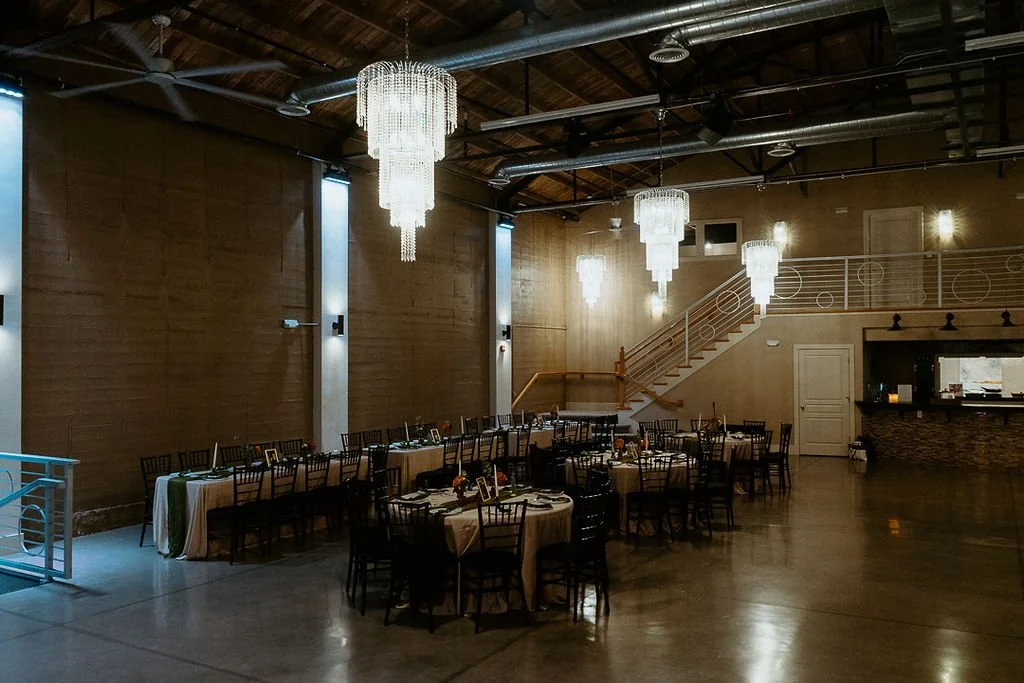
The Grand Auditorium already offers contrast, height and crystal light. Photography by Raven & Rose Photo.
Begin with Olive Not Orange
Olive is what makes this palette feel grounded. It connects the flowers, linen and natural textures without immediately announcing a fall theme. It also sits comfortably beside Mission Theatre's dark chairs, ivory surfaces and warm metallic light.
In Zola's 2026 First Look Report, green appears in 53 percent of weddings, with couples continuing to favor soft, nature-based palettes. At Mission Theatre, a deeper olive has enough presence for autumn while still behaving like a neutral.
Olive becomes the anchor. Use it on napkins, a velvet runner, ribbon or one portion of the wedding party. Repeating the same green in several textures gives the room cohesion without requiring every element to match exactly.
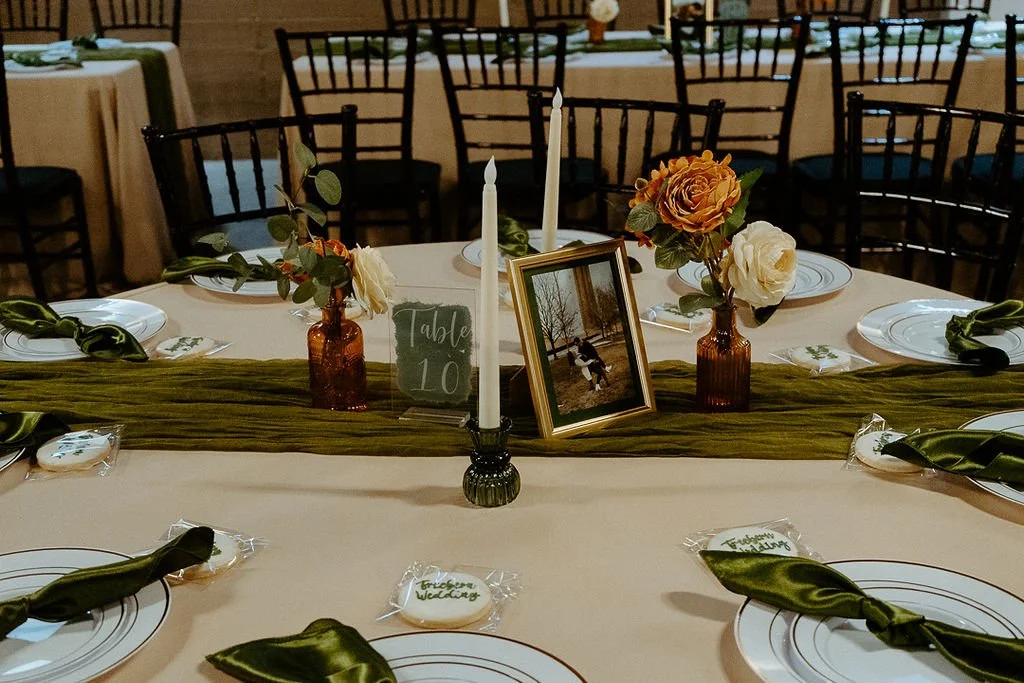
Olive napkins and a soft runner give the round table quiet depth.
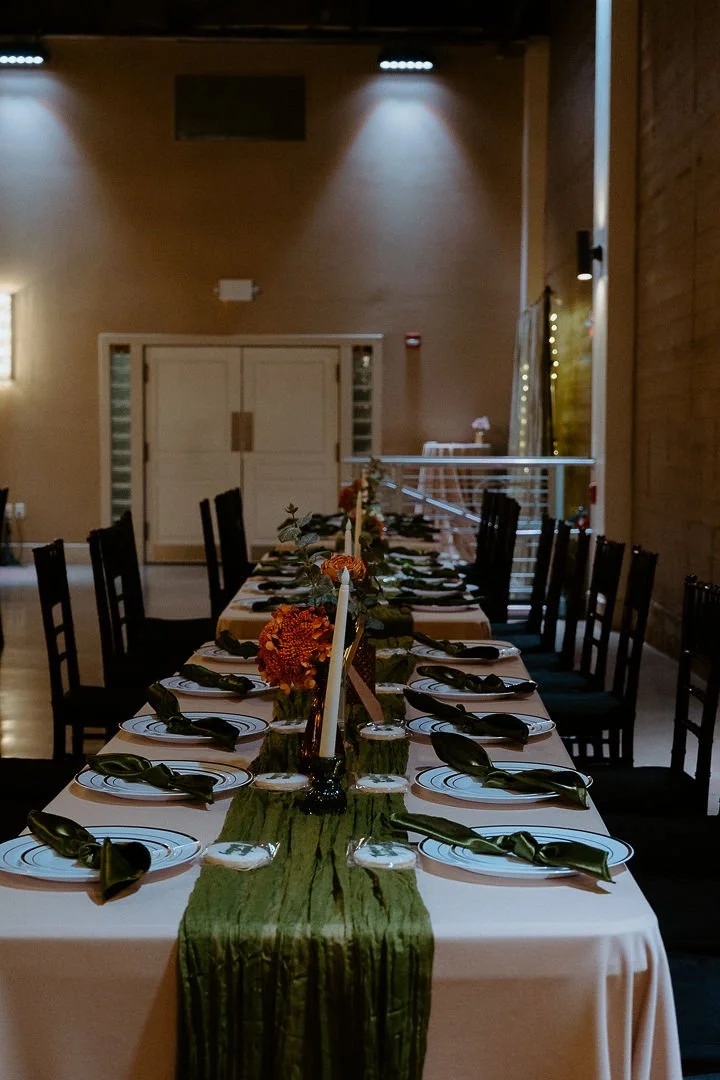
The same color travels down a long table in velvet and glass.
Place Rust and Merlot Where the Eye Naturally Lands
Rust and merlot have more visual weight, so they work best in smaller, memorable places: a bridesmaid dress, a floral focal point, a taper candle, the edge of an invitation or an amber vessel. When they appear everywhere at once, the palette can become heavy. When they appear at eye level and repeat with restraint, they make the room feel warm.
This celebration paired ivory tailoring and white flowers with rust and deep green velvet. The lighter pieces keep faces and florals clear in photographs, while the saturated colors create depth around them. The contrast feels intentional and formal - particularly against the theatre's black-and-gold exterior.
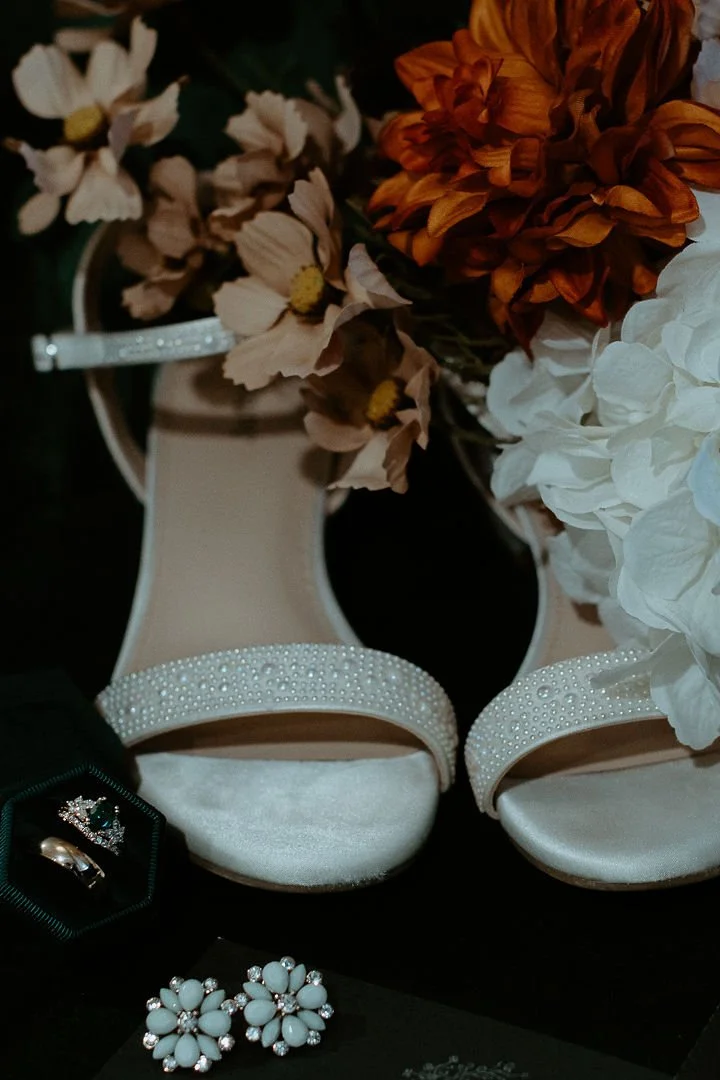
A few saturated details are enough to establish the palette.
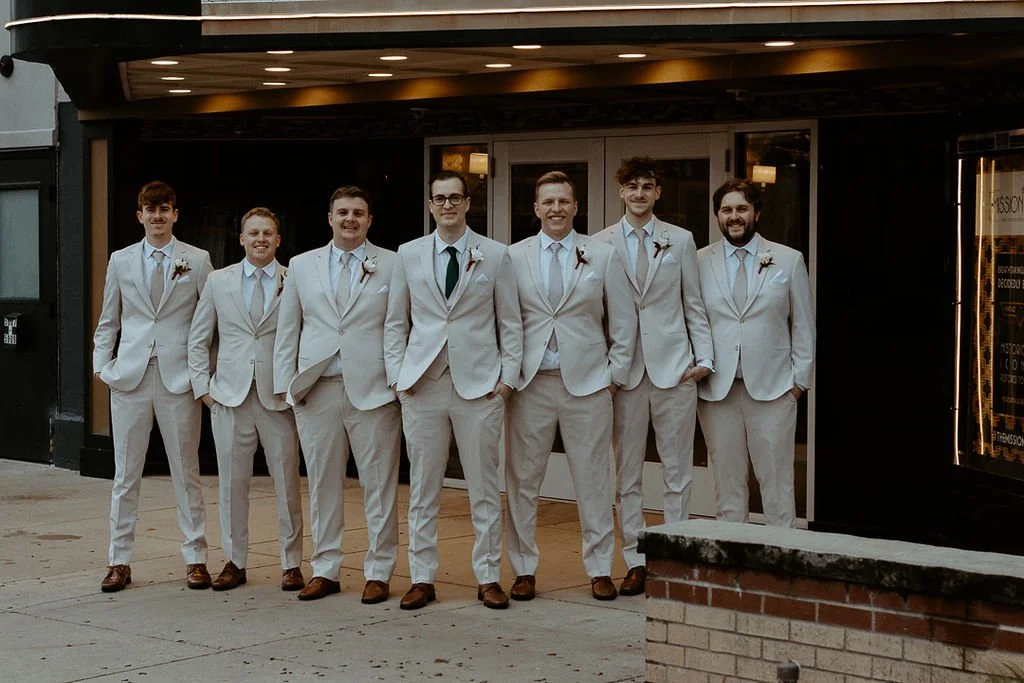
Ivory tailoring keeps the deeper colors from feeling visually heavy.
Keep the Florals Light
A dark autumn palette does not require dark flowers. White blooms create breathing room, hold their shape in low light and connect naturally to the stage draping and bridal gown. Rust, cinnamon and muted red can then appear as smaller notes rather than a solid mass.
Low arrangements are particularly effective for dinner because they protect conversation and keep the chandeliers visible across the room. Candlelight and amber glass provide the warmth that a larger floral installation might otherwise be asked to create.
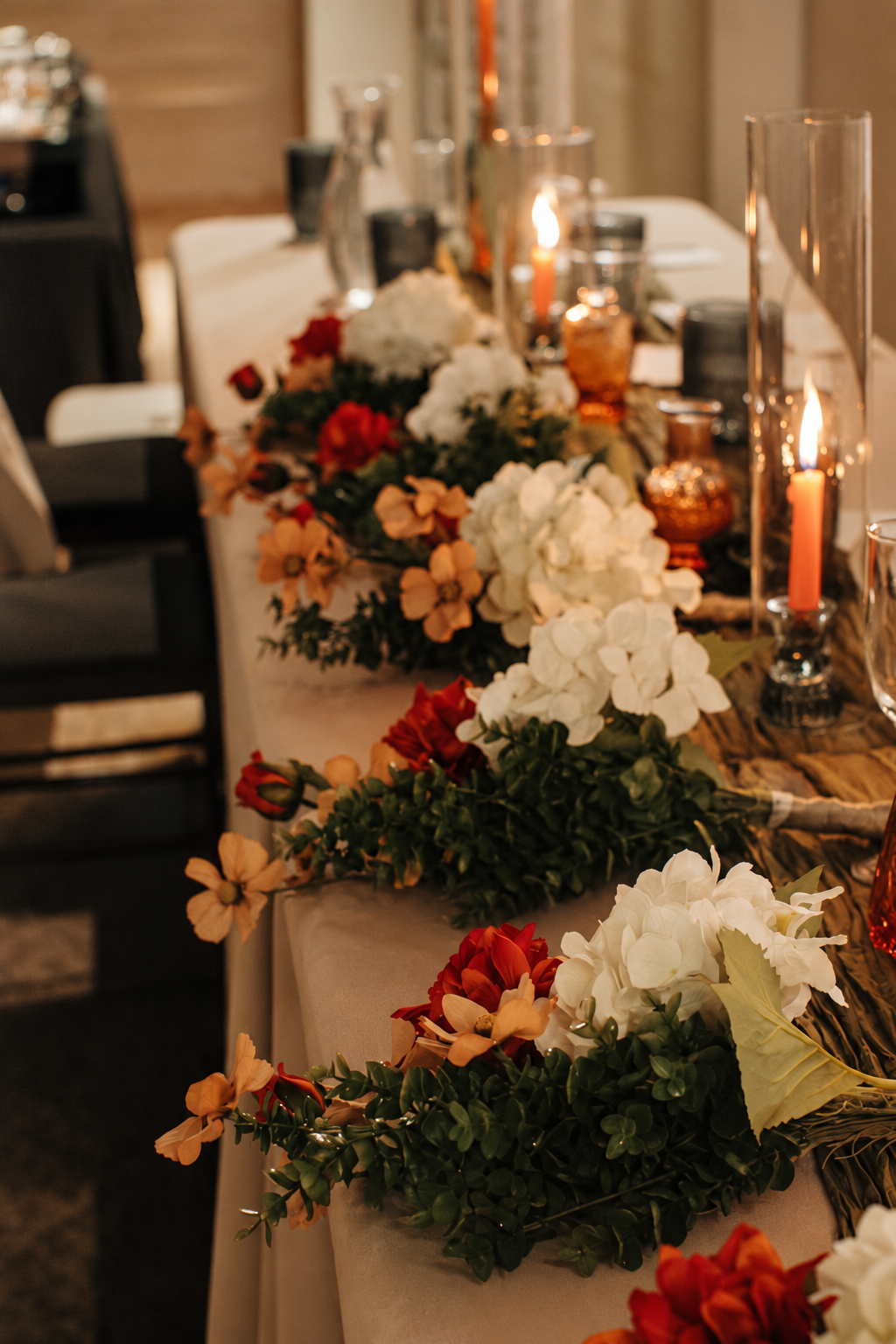
White flowers carry the light while rust accents and amber glass provide warmth. Photography by Raven & Rose Photo.
Use Texture to Make a Limited Palette Feel Rich
The palette stays interesting because the materials change: velvet dresses, satin napkins, lace, polished concrete, glass chandeliers and the matte surface of the theatre walls. Texture creates variation without adding another color.
For an elegant fall wedding, choose two or three tactile materials and repeat them. Velvet may appear in the wedding party and table runner. Glass can move from votives to chandeliers. Lace can remain personal to the dress rather than becoming a decorative motif throughout the room. Restraint is what allows each material to register.
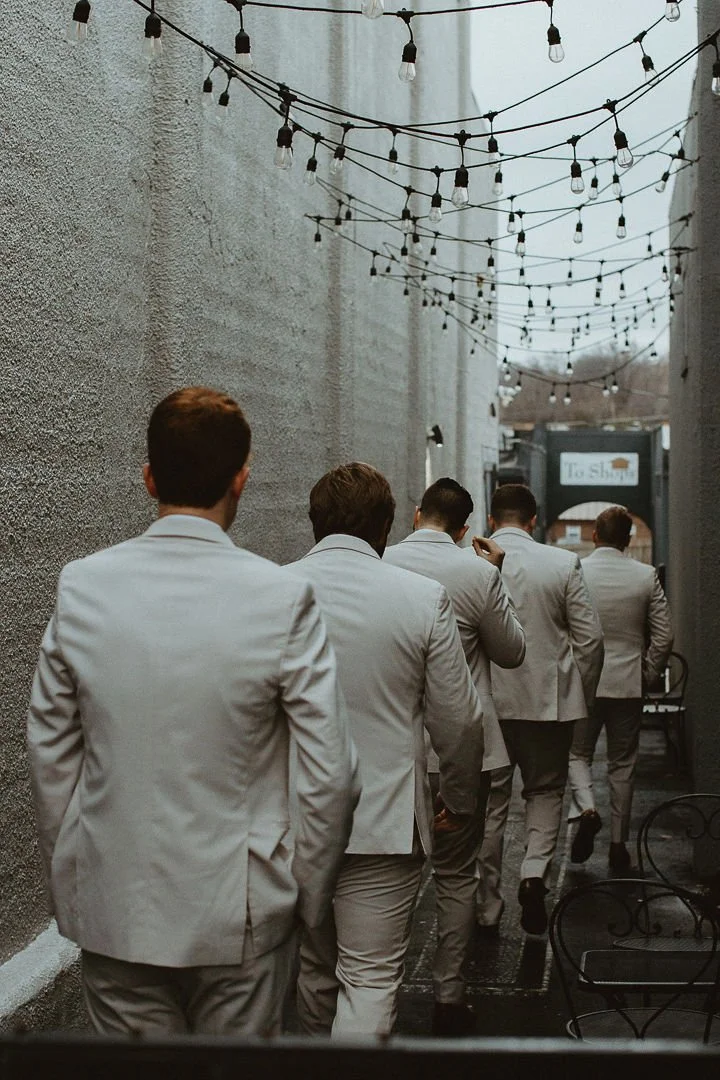
The String Lit Alley adds another texture and scale without leaving the venue. Photography by Raven & Rose Photo.
Let the Light Finish the Palette
Fall colors change as the day moves. Olive appears softer in daylight, rust becomes deeper beside candles, and merlot can move almost to black after dinner. That shift is part of the atmosphere, but it should be planned rather than discovered after the reception begins.
Mission Theatre offers dimmable crystal chandeliers and customizable lighting. Ask to view your palette under the evening settings you plan to use. Soft white and muted amber usually protect skin tones and the natural character of the colors. A more saturated lighting look can be saved for the dance floor, when the mood is meant to change.
Let the light finish the palette. The linens, flowers and clothing establish the colors; the theatre turns them into an evening.
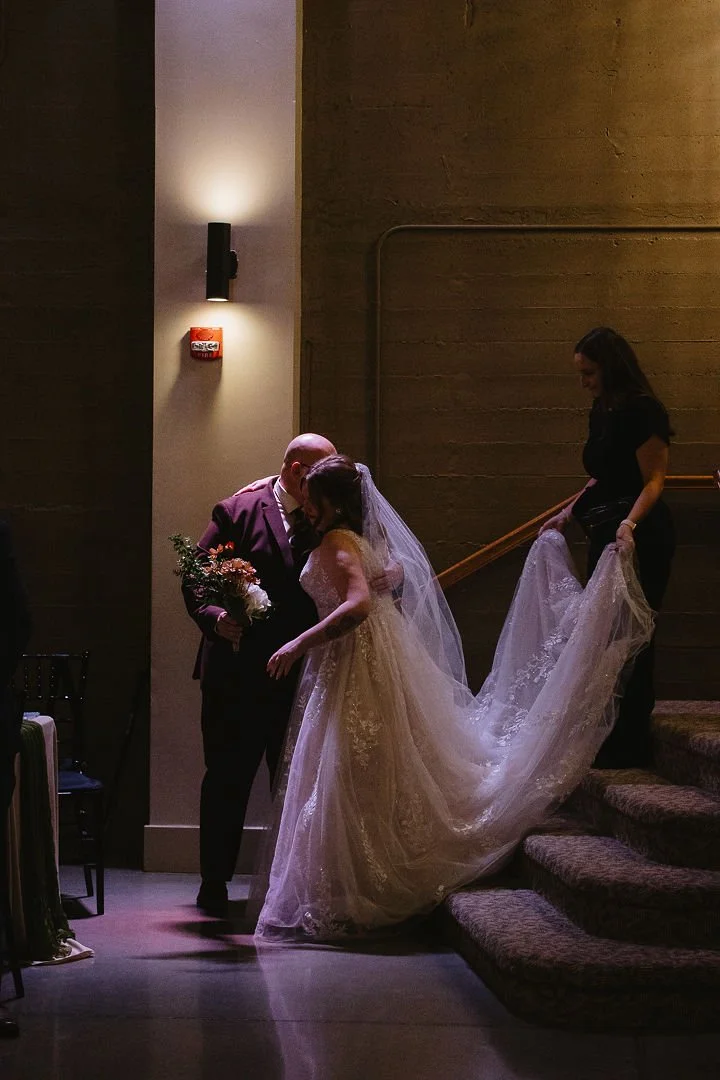
Focused light makes the staircase entrance feel cinematic.
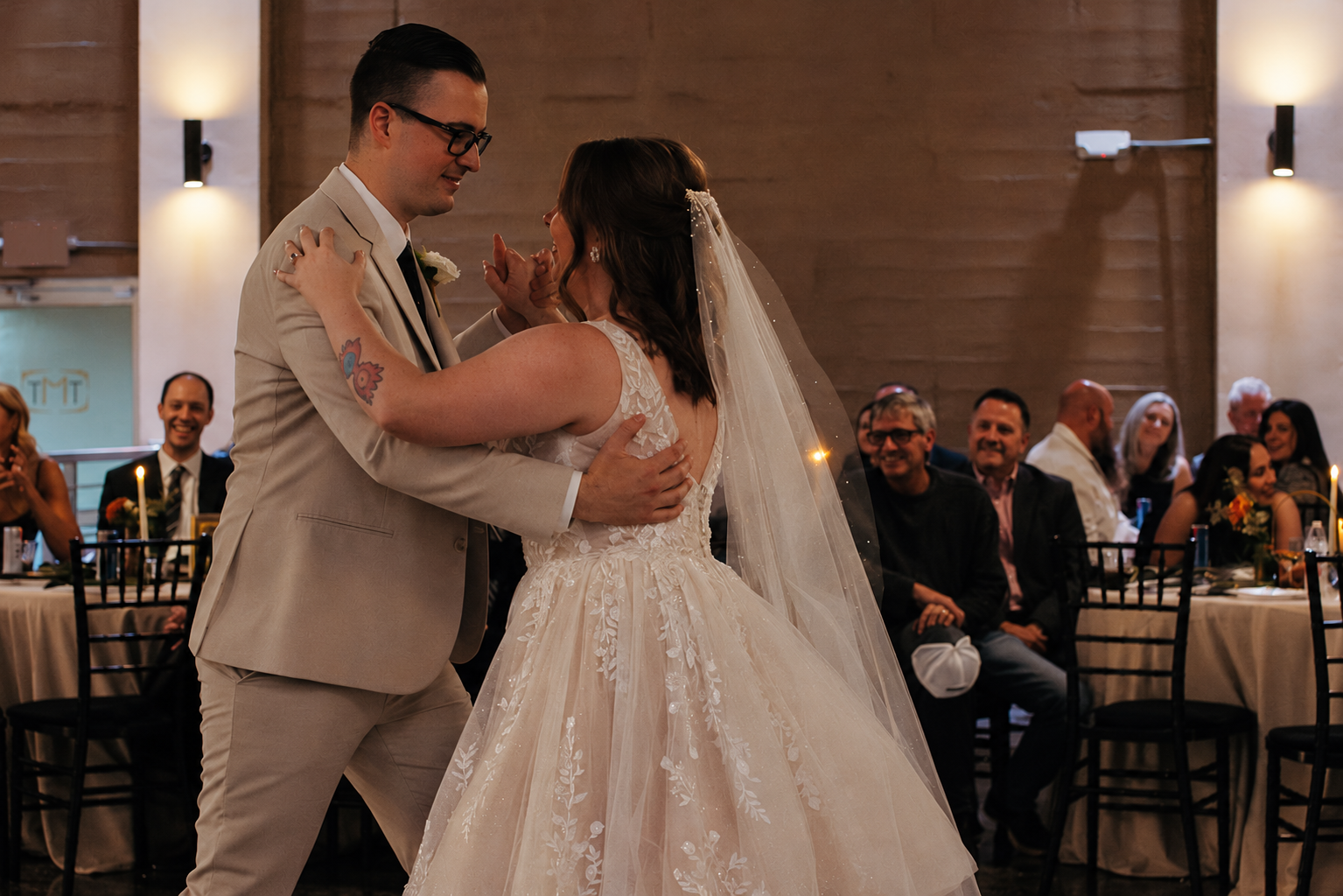
The palette becomes softer and more intimate after dinner.
Give the Architecture the Last Word
A historic theatre already has a point of view. The marquee, the Art Deco facade, the stage and the chandeliers are not blank surfaces waiting to be covered. They are the reason a restrained palette feels distinctive here.
Carry the colors outside through clothing, flowers or a single ribbon, then let the black, ivory and gold exterior complete the photograph. Inside, leave enough negative space around the couple for the architecture to remain legible. The room should still look like a theatre - and the celebration should still look unmistakably like the couple.
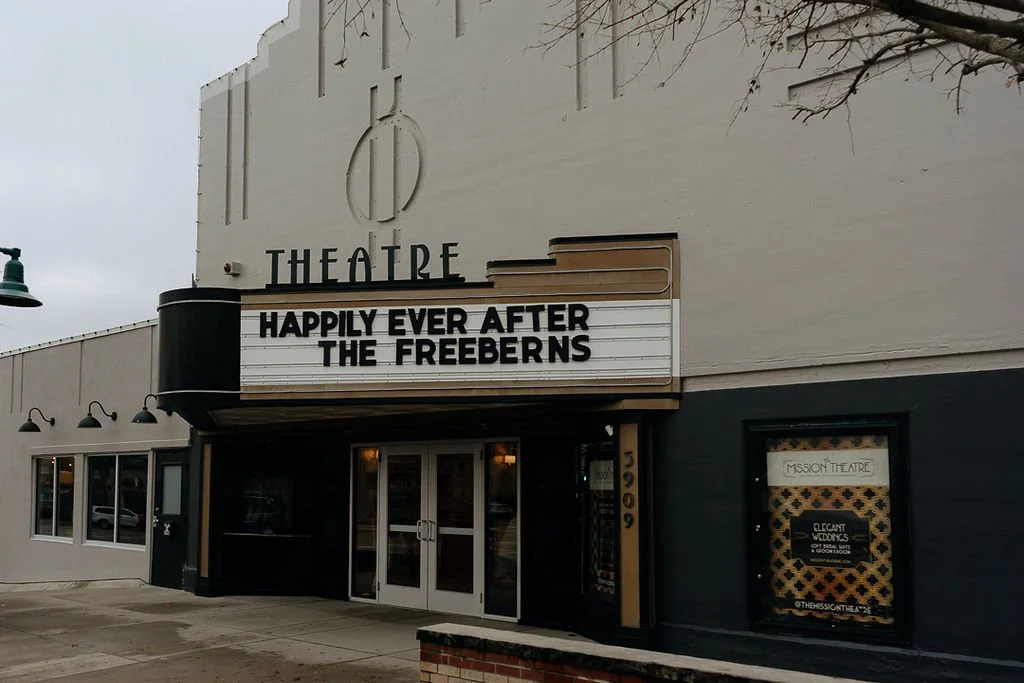
The custom marquee makes the arrival part of the color story.
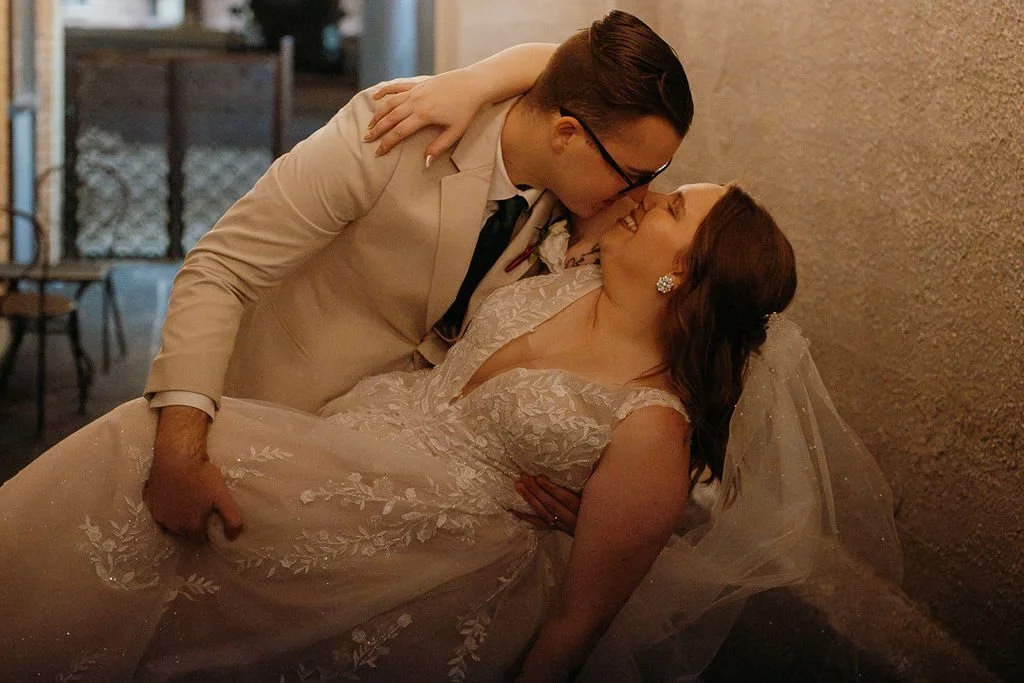
Warm neutrals let the couple remain the focus.
A Simple Formula for the Palette
60 percent ivory champagne or soft neutral: Use on the largest surfaces so the room stays open and photographs stay luminous.
25 percent olive or deep green: Repeat through linen, attire, ribbon or foliage to create continuity.
10 percent rust or merlot: Place at eye level in dresses, flowers, candles or paper details.
5 percent warm gold and amber: Let chandeliers, frames, glass and candlelight provide the finish.
Treat the percentages as a starting point rather than a rule. If the wedding party carries more color, simplify the tables. If the tables are richly layered, let the ceremony remain quiet. Elegance comes from deciding where the color matters most.
See the Colors in the Room
Bring one fabric swatch, one floral reference and one photograph of the evening atmosphere you want to a private tour. Stand beneath the chandeliers and look at the materials together - first in the brighter part of the room, then in the warmer light.
Sometimes the clearest way to imagine a fall wedding is simply to watch the room change between afternoon and evening. We would be honored to walk the space with you and help you shape a celebration that feels elegant, personal and entirely your own.
Frequently Asked Questions
-
Olive, rust, merlot, ivory and warm gold work especially well with the theatre's black, white and metallic foundation. Keep the largest surfaces light, then use deeper colors in attire, florals, linen and candlelight.
-
Use ivory linen, white flowers and clear glass to reflect light. Keep arrangements low, preserve sightlines to the chandeliers and test the palette under the evening lighting settings before finalizing it.
-
Mission Theatre lists seven dimmable crystal chandeliers and customizable lighting. Coordinate the final lighting plan with the venue team and its exclusive DJ partner so the colors remain flattering during dinner and can become more expressive for dancing.
-
Yes. Both can take place in the Grand Auditorium. Some floor plans may require a room-flip fee, while certain Oscar-style layouts may avoid it. Ask the venue team which option best fits your guest count and design.
-
Mission Theatre currently lists capacity for up to 250 guests for a seated ceremony and reception and up to 400 guests for a cocktail-style event. The best layout depends on the event format.
-
Mission Theatre is at 5909 Johnson Drive in Mission, Kansas, about ten minutes west of the Country Club Plaza. The venue's current information also notes more than 300 off-street parking spaces.
More from the Celebration
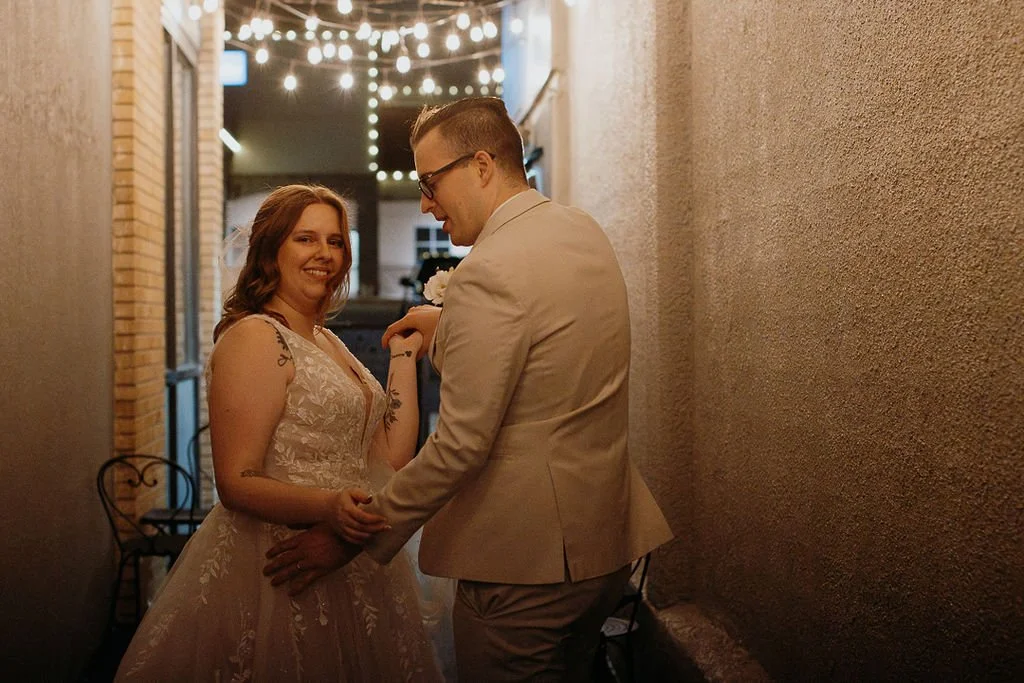
The String Lit Alley carries the celebration into a softer evening light.
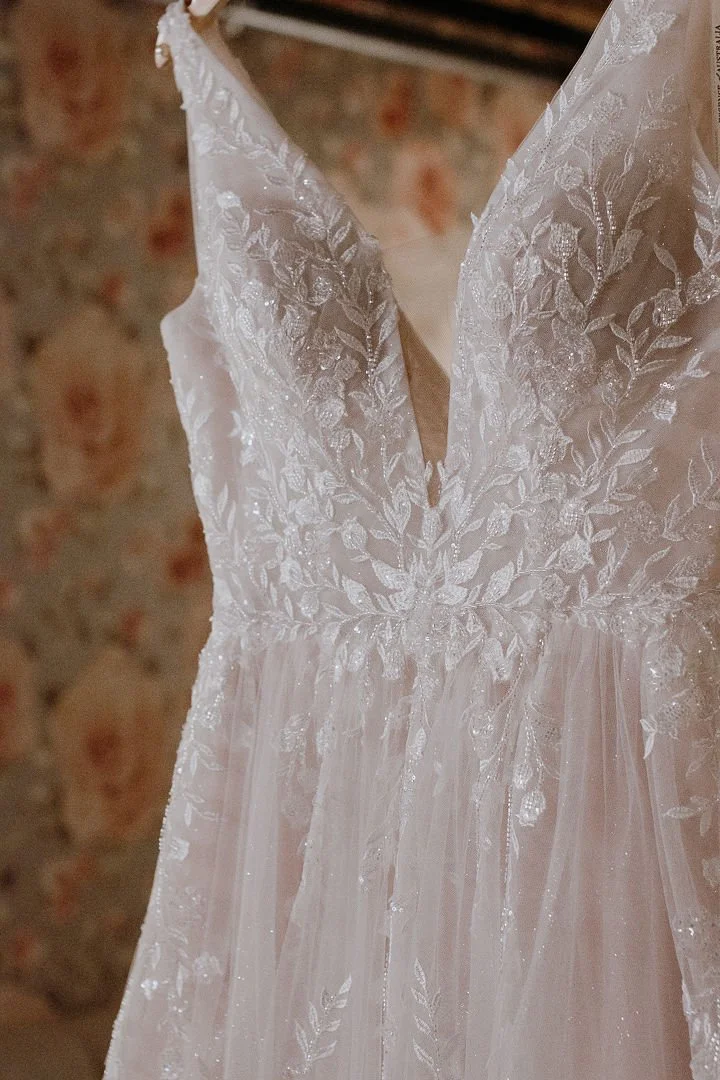
Lace and beadwork against the bridal suite wallpaper.
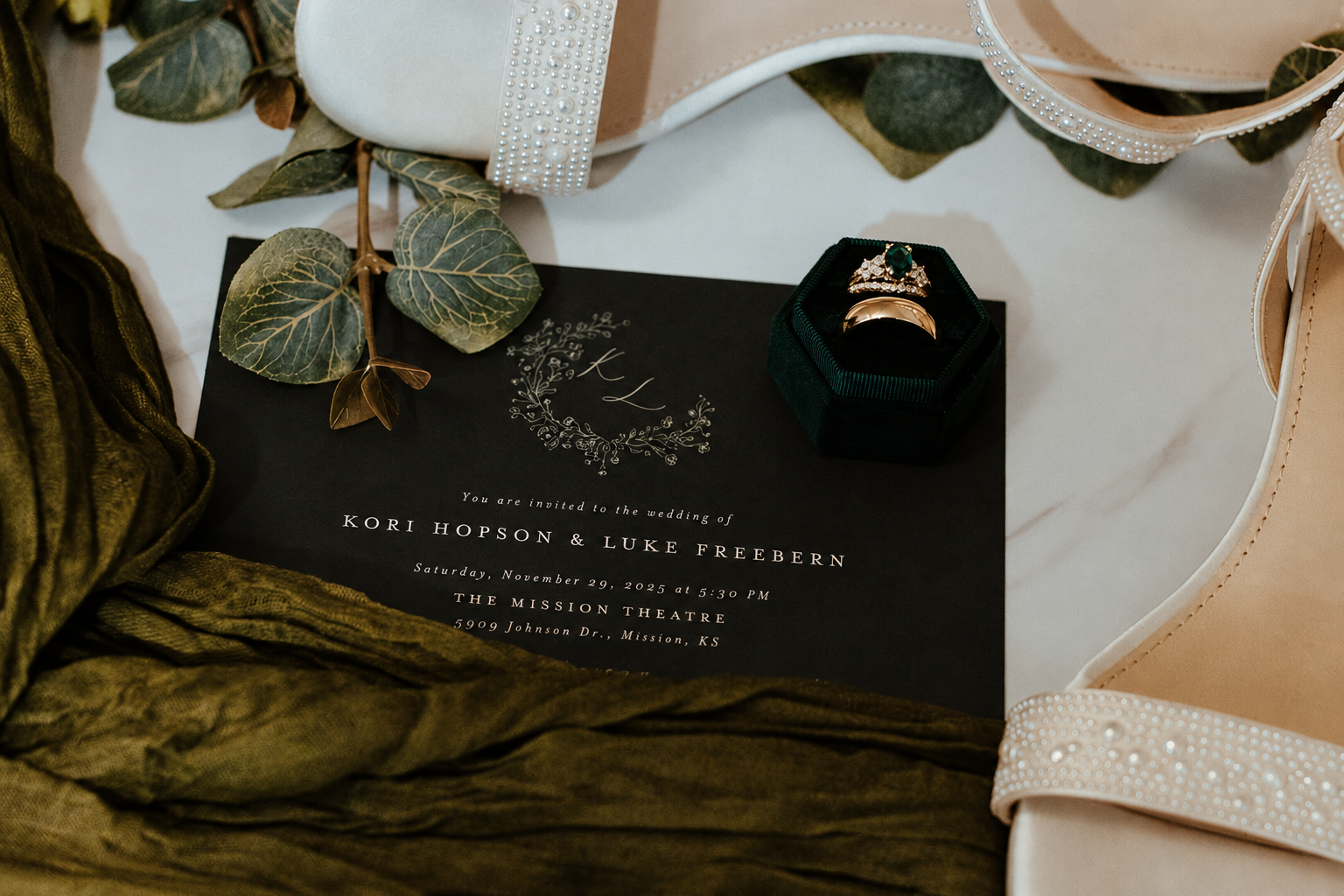
Black invitation, olive velvet, rings and ivory shoes.
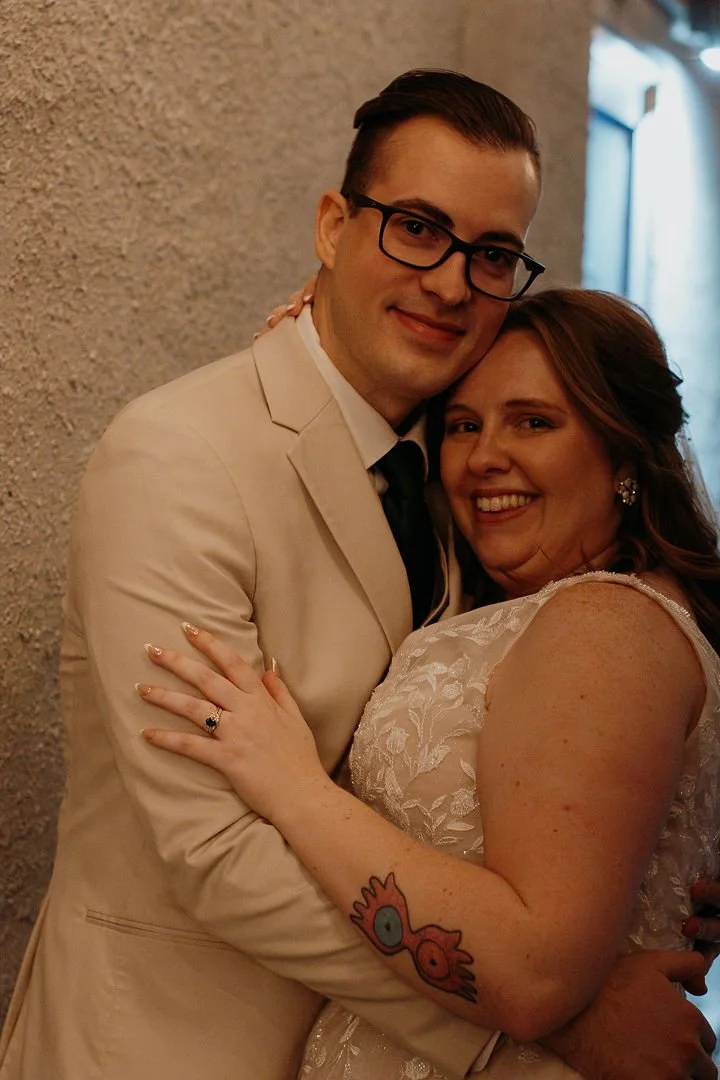
A genuine smile keeps the portrait warm and personal.